
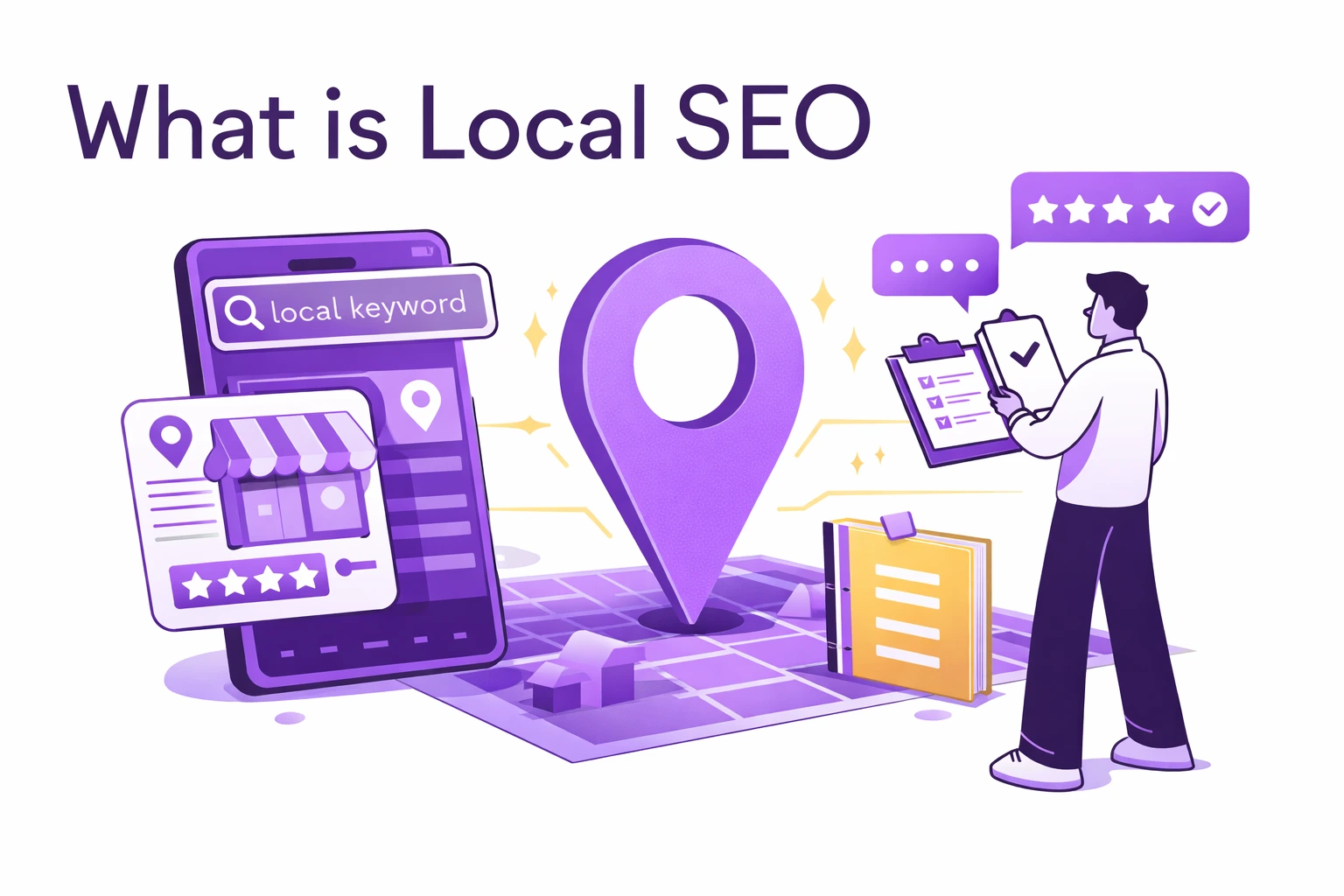
Local SEO is the practice of optimizing your online presence to attract more customers from geographically relevant searches in your area. This specialized branch of search engine optimization focuses on helping businesses with physical locations or those serving specific geographic regions appear prominently when nearby customers search for their products or services. Unlike traditional SEO that targets broad, national audiences, local SEO concentrates on capturing “near me” searches and location-specific queries that demonstrate immediate purchase intent.
The significance of local SEO cannot be overstated in today’s mobile-first world. Research shows that 46% of all Google searches have local intent, meaning nearly half of all searches are looking for nearby businesses, products, or services. Even more compelling, 76% of smartphone users who search for something nearby visit a physical location within 24 hours, and 28% of those searches result in a purchase. Every week, 80% of consumers search for local businesses online, making local SEO not just important but essential for survival and growth in competitive markets.
Understanding the distinction between local SEO and traditional SEO helps clarify where to focus your optimization efforts and marketing resources.
Traditional SEO focuses on improving your website’s visibility across broad, often national or international searches without geographic limitations. Success metrics include ranking for competitive keywords regardless of location, attracting organic traffic from anywhere in the world, building backlinks from authoritative websites globally, and creating content that appeals to wide audiences. Traditional SEO prioritizes blog content, comprehensive guides, and educational resources designed to establish topical authority.
Local SEO, conversely, concentrates specifically on geographic visibility and local relevance. The primary focus involves optimizing your Google Business Profile (formerly Google My Business), building local citations with consistent NAP (Name, Address, Phone) information, earning reviews from local customers, targeting location-specific keywords, appearing in Google’s Local Pack (the map-based results showing three businesses), and creating location-pages for multiple business addresses. Local SEO prioritizes proximity and relevance to local searchers over pure domain authority.
Google uses different ranking systems for local search results compared to traditional organic results. For local pack and Google Maps rankings, Google considers three primary factors. Relevance measures how well your business matches what the searcher wants. Distance calculates how far your business location is from the searcher’s position or their searched location. Prominence evaluates how well-known, reputable, and trustworthy your business appears based on reviews, citations, and online presence.
Traditional organic rankings rely more heavily on factors like content quality and comprehensiveness, domain authority and backlink profiles, technical SEO elements, on-page optimization including keywords and metadata, and user experience signals like engagement and dwell time. While there’s overlap between these ranking systems, local SEO demands specific attention to geographic signals that traditional SEO doesn’t prioritize.
The most successful local businesses implement comprehensive strategies incorporating both approaches. Local SEO gets you found when customers search with immediate intent to visit or contact businesses nearby. Traditional SEO builds your authority for informational searches, captures customers earlier in the buying journey, supports your local efforts with quality content, and provides long-term traffic growth. Together, these approaches create a robust online presence that captures customers at every stage of their journey.
Your Google Business Profile (GBP) represents the cornerstone of any local SEO strategy. This free tool from Google controls how your business appears in Google Search, Google Maps, and the coveted Local Pack that displays above organic search results. GBP isn’t just another listing it’s often your digital storefront, the first impression potential customers have of your business before they ever visit your website.
Google Business Profile directly influences whether you appear in local search results at all. Statistics demonstrate that businesses with complete GBP profiles are 2.7 times more likely to be considered reputable by potential customers, making them 70% more likely to visit and 50% more likely to make a purchase. Optimized profiles receive 42% more direction requests and 35% more website clicks compared to incomplete listings. Businesses with over 100 photos see even more dramatic results: 520% more calls and 1,065% more website clicks.
Optimization begins with claiming and verifying your business profile. Search for your business on Google and click “Own this business?” or create a new listing at business.google.com. Google typically verifies ownership by sending a postcard with a verification code to your business address, though phone or email verification is sometimes available. Verification is now mandatory for certain advertising features and signals legitimacy to both Google and potential customers.
Complete every section of your GBP to maximize visibility and conversion potential. Start with accurate business category selection your primary category significantly impacts which searches trigger your business. Choose the most specific category that accurately describes your core offering, then add up to nine additional categories for secondary services. Research shows that specific categories like “Italian Restaurant” outperform generic ones like “Restaurant” for relevant searches.
Your business name should match exactly what appears on your signage and legal documents. While some businesses add keywords to their names, this violates Google’s guidelines and risks suspension. Keep your business name clean and accurate. Your address must be your actual physical location where customers can visit or where you conduct business operations. Service-area businesses that don’t serve customers at their address should hide their address and instead specify service areas.
Phone number selection matters more than many businesses realize. Use a local phone number with your area code rather than toll-free numbers when possible. Consistent use of one primary number across all platforms strengthens local SEO signals. Ensure your business hours are accurate and update them for holidays or special events. Many customers check hours before visiting, and incorrect information frustrates potential customers and damages trust.
Your business description provides opportunity to naturally incorporate keywords while explaining what makes your business unique. Write 750 characters of compelling, informative copy that addresses customer needs and questions. Focus on services offered, what makes you different from competitors, your experience or credentials, and specific products or specializations. Avoid keyword stuffing or marketing language that sounds robotic. Instead, write conversationally as if explaining your business to a neighbor.
Google Posts allow you to publish updates directly on your business profile, similar to social media posts. These appear in your GBP and can highlight special offers, new products, events, blog posts, or company updates. Regular posting signals to Google that your business is active and engaged, potentially improving your rankings. Posts also provide additional opportunities to include relevant keywords and compelling calls-to-action that drive clicks, calls, or visits.
Post consistently at least weekly if possible to maintain active signals. Include high-quality images with each post, as posts with visuals receive significantly more engagement. Always include clear calls-to-action like “Learn More,” “Call Now,” or “Get Offer” to drive conversions from your profile.
Visual content dramatically impacts customer engagement and conversion rates. Businesses with at least one photo receive 16% more leads compared to those without photos, while profiles with over 100 photos see exponential increases in calls and website visits. Upload a variety of photo types including exterior shots showing your building and signage, interior photos highlighting your space, team photos introducing staff members, product or service photos showcasing what you offer, and photos of completed work or satisfied customers.
Ensure photos are high-quality, well-lit, and professional-looking. Aim to add new photos regularly at least monthly to keep your profile fresh and give potential customers current insights into your business. Google also allows 360-degree photos and videos for even more engaging profiles.
Local citations are online mentions of your business’s Name, Address, and Phone number (NAP) across various platforms including business directories, review sites, social media profiles, and third-party websites. Citations serve as critical trust signals to search engines, helping verify your business’s existence, legitimacy, and location. Google uses citations from multiple authoritative sources to confirm the accuracy of your business information before confidently displaying it in search results.
Multiple industry studies confirm citations rank among the top five local SEO factors for both Local Pack and organic local rankings. The Whitespark Local Search Ranking Factors Survey consistently identifies citation quantity, quality, and NAP consistency as foundational elements that influence where businesses appear in local results. Businesses with 40 or more accurate citations rank 53% higher in local search results compared to those with fewer listings.
Citations work by creating validation points across the web that collectively signal to Google that your business information is accurate and trustworthy. Each quality citation acts as a vote of confidence. When Google finds consistent NAP information across dozens of reputable directories, it interprets this pattern as evidence that the business is legitimate and the information reliable. This trust directly translates to improved local rankings.
Understanding citation types helps prioritize your citation-building efforts for maximum impact.
Structured citations appear in formal business listings and directories in standardized formats. These include platforms like Google Business Profile, Bing Places, Apple Maps, Yelp, Yellow Pages, TripAdvisor, Angie’s List, and industry-specific directories relevant to your business type. Structured citations typically follow consistent layouts with designated fields for each piece of business information, making them easy for search engines to parse and verify.
Unstructured citations mention your NAP information within less formal contexts like blog posts, news articles, magazine features, event listings, sponsorship mentions, and press releases. While unstructured citations don’t follow standardized formats, they still carry significant weight, particularly when they appear on authoritative local news sites, community organizations, or respected industry publications. A restaurant featured in a local food blogger’s article with the address and phone number constitutes a valuable unstructured citation.
Effective citation building follows a systematic approach that prioritizes quality over quantity while ensuring consistency across all listings.
Start with major data aggregators and primary platforms that feed information to hundreds of other directories. Focus first on Google Business Profile, Bing Places, Apple Maps, and Facebook, as these platforms hold the most weight and distribute data to other services. Next, target major directories like Yelp, Better Business Bureau, YellowPages, and Foursquare that carry significant authority and traffic.
Expand to industry-specific directories relevant to your business type. Lawyers should list on Avvo and FindLaw, restaurants should prioritize TripAdvisor and OpenTable, contractors should target HomeAdvisor and Thumbtack, and healthcare providers should focus on Healthgrades and Zocdoc. Industry-specific citations often provide more qualified leads because they target users already interested in your service category.
Submit to local directories and chamber of commerce websites in your area. Local chambers, business associations, tourism boards, and community websites provide geographically relevant citations that strengthen local relevance signals. These platforms may have lower traffic but carry significant weight for local SEO because they’re explicitly tied to your geographic market.
NAP consistency means your business Name, Address, and Phone number appear identically across every online platform where your business is mentioned. This seemingly simple requirement represents one of the most important yet frequently overlooked aspects of local SEO.
Even minor variations create confusion for search engines. Writing “Street” on one platform and “St.” on another, using “Suite 100” versus “#100,” listing your business as “ABC Company” on one site and “ABC Co.” on another, or including extensions like “(555) 123-4567 ext. 5” inconsistently all constitute NAP inconsistencies that dilute your local SEO effectiveness. Search engines cross-reference your information across dozens of sources. When they encounter conflicting data, they can’t confidently verify which version is correct, leading to confusion that hurts your rankings.
Create a master NAP record that serves as your single source of truth. Document exactly how your business name, complete address with formatting, and phone number should appear everywhere. Include specifications for abbreviations, punctuation, suite numbers, and any other details. Share this document with anyone who manages your online presence to ensure consistency.
Conduct regular citation audits to identify inconsistencies. Search for your business name plus old phone numbers, previous addresses, and common misspellings to uncover outdated or incorrect citations. Use citation management tools like Moz Local, BrightLocal, Yext, or Whitespark to scan hundreds of directories and identify discrepancies. These services can also help correct and maintain consistent information across multiple platforms simultaneously.
Fix inconsistencies starting with the most authoritative platforms first. Update your Google Business Profile, website, Facebook, Bing Places, and Apple Maps before addressing smaller directories. The major platforms feed data to other sources, so corrections here propagate throughout the ecosystem. Remove duplicate listings when you find them, as multiple listings for the same business with slightly different information cause significant confusion.
Customer reviews represent one of the most powerful yet challenging aspects of local SEO. Reviews serve triple duty: they influence search rankings, impact consumer purchase decisions, and provide valuable feedback for business improvement. Google considers reviews a prominence signal one of its three primary local ranking factors alongside relevance and distance.
Studies consistently show strong correlation between review quantity, quality, and local search rankings. Businesses ranking in the top three Local Pack positions typically have significantly more reviews and higher average ratings than those ranking lower. While Google hasn’t confirmed the exact weight of reviews in its algorithm, industry research estimates reviews account for 15-20% of local ranking factors.
Reviews impact rankings through multiple mechanisms. The quantity of reviews signals popularity and customer engagement. The recency of reviews demonstrates ongoing business activity. The frequency of new reviews suggests consistent customer satisfaction. Review velocity how quickly you accumulate reviews indicates growing popularity. Even review diversity across multiple platforms beyond Google creates additional validation signals.
Beyond algorithmic impacts, reviews directly influence conversion rates. Research shows 93% of consumers say online reviews influence their purchasing decisions. Businesses with higher ratings and more reviews generate more clicks from search results, more phone calls, more direction requests, and ultimately more customers. A business ranking fourth with 200 positive reviews often receives more customers than one ranking first with only 10 reviews.
The answer varies significantly by industry and market competitiveness. In small towns or niche industries, 10-20 positive reviews might establish strong positioning. In competitive urban markets or popular categories like restaurants and legal services, top-ranking businesses often have hundreds or thousands of reviews.
Research your specific competitive landscape by analyzing businesses currently ranking in the Local Pack for your target keywords. Note their review counts and average ratings. Aim to match or exceed the median performer in your market. Remember that ongoing accumulation matters more than achieving a single milestone. Businesses that consistently generate 5-10 new reviews monthly demonstrate active customer engagement that both search engines and consumers value.
Generating reviews requires systematic processes rather than occasional requests. The most successful businesses make review generation a consistent part of their customer experience.
Ask every satisfied customer for a review at the optimal moment when satisfaction is highest. For service businesses, request reviews immediately after successfully completing a project. For restaurants, ask as customers pay their bill or shortly after their meal. For healthcare providers, request reviews a few days after appointments once patients have recovered. Timing significantly impacts response rates.
Make leaving reviews as easy as possible by providing direct links that take customers straight to your review platform. Google Business Profile generates a short URL specifically for reviews that you can share via text, email, or printed materials. Simplifying the process dramatically increases response rates.
Train staff to request reviews as part of standard procedures. Front desk staff, service technicians, sales representatives, and customer service teams should all understand the importance of reviews and feel comfortable asking. Provide scripts or talking points to make requests feel natural: “We really appreciate your business. If you’re happy with our service, would you consider leaving us a review? It helps other customers find us.”
Implement automated review request systems using email or SMS. Services like Podium, Birdeye, and ReviewTrackers allow you to automatically send review requests after transactions or service completion. Automation ensures no customer is overlooked while maintaining personal touchpoints.
Responding to reviews both positive and negative demonstrates engagement and builds trust with potential customers reading reviews. Response rate is also believed to positively influence local rankings, as it signals active business management.
Respond to every review when possible, aiming for 100% response rates. Thank customers for positive reviews with personalized responses that mention specific details from their comments. This shows genuine appreciation rather than templated replies. For negative reviews, remain professional and solution-focused. Acknowledge their concerns, apologize for shortcomings, and offer to make things right. Never argue with reviewers or become defensive, as your response reflects on your business to all future readers.
Include relevant keywords naturally in your responses when appropriate, as review text and responses are indexed by Google. A plumber might respond: “Thank you for choosing us for your water heater installation! We’re glad our emergency plumbing service met your expectations.” This reinforces keyword relevance while remaining genuine and helpful.
Local keyword strategy differs significantly from traditional SEO keyword targeting. Local keywords explicitly or implicitly indicate geographic intent, signaling that searchers want results from specific locations.
Explicit local keywords directly include location terms within the search query. Examples include “dentist in Chicago,” “Austin coffee shops,” “Seattle plumbing services,” and “Miami Beach hotels.” These queries leave no ambiguity about the searcher’s desired location and typically trigger Local Pack results.
Implicit local keywords don’t include location terms but carry clear local intent that Google recognizes. Phrases like “restaurants near me,” “emergency plumber,” “family dentist,” and “car repair shop” all imply that searchers want nearby results. Google uses the searcher’s location to return geographically relevant results even without explicit location terms.
Location modifiers can be broad (city or state names) or hyperlocal (neighborhoods, districts, or landmarks). A coffee shop in Brooklyn might target “coffee shop Brooklyn” broadly but also “coffee near Prospect Park” or “Williamsburg cafe” for hyperlocal optimization. Hyperlocal terms often have lower search volumes but higher conversion rates because they capture searchers in specific areas with strong intent.
Start by identifying your core services or products, then add geographic modifiers for your target locations. If you’re a family law attorney in Portland, begin with “family lawyer” and add “Portland family lawyer,” “family law attorney Portland Oregon,” “divorce lawyer Portland,” and “child custody attorney Portland.”
Use Google Autocomplete to discover how real users search. Type your service plus your location and note the suggestions Google provides. These represent actual search queries with sufficient volume to warrant suggestions. Google’s “People Also Ask” and “Related Searches” features at the bottom of search results pages provide additional keyword ideas based on real user behavior.
Research competitor keywords by analyzing what local competitors rank for. Use tools like Semrush or Ahrefs to identify keywords driving traffic to competing businesses in your area. Look for gaps where competitors rank but you don’t, as these represent opportunities. Also identify where you already rank on page two or three, as these keywords require less effort to improve into page one positions.
Utilize keyword research tools designed for local SEO. Platforms like BrightLocal, Local Falcon, and Whitespark provide location-specific keyword data including search volumes and competition levels for geographic terms. Standard keyword tools often show national data that doesn’t reflect local competition levels accurately.
Strategic keyword placement throughout your website strengthens local relevance signals without resorting to keyword stuffing or unnatural language.
Create dedicated location pages for each geographic area you serve. If you operate in multiple cities or neighborhoods, build individual pages optimized for each location. Include the location name in the page title, H1 heading, several times naturally within body content, meta description, URL structure, and image alt text. These pages should provide unique, valuable content about your services in each location rather than templated pages with only the city name changed.
Optimize your homepage for your primary business location using your city or region prominently in your title tag, prominently in your H1 or H2 headings, within the first paragraph of content, in your business description, and on your contact page with your full address displayed. The homepage typically carries the most authority, so optimizing it for your main location provides significant benefits.
Include location terms in blog posts and service pages naturally. Write content that addresses local concerns, references local landmarks or events, and incorporates location terms where relevant. A roofing company might publish “Preparing Your Seattle Home for Winter Storms” or “Best Roofing Materials for Portland’s Climate.” These posts target local keywords while providing genuine value to local audiences.
Add location information to your footer and contact page visible on every page. Include your NAP information in your footer using LocalBusiness schema markup to help search engines understand your location. Many businesses also add a Google Map embed to their contact page for additional geographic signals.
While Google Business Profile and citations drive local pack rankings, your website’s on-page optimization influences both local organic results and provides important validation signals that support overall local visibility.
Title tags should include your primary keywords plus location modifiers for key pages. A Seattle accounting firm might use “Seattle CPA Services | Small Business Accounting | ABC Accounting” as their homepage title. Location pages should follow the pattern “Service + Location + Brand” like “Portland Personal Injury Lawyer | ABC Law Firm.”
Meta descriptions won’t directly impact rankings but influence click-through rates from search results. Include location terms and compelling value propositions to encourage clicks: “Leading Portland personal injury attorney with 20+ years experience. Free consultation. Call today for expert legal representation.”
Header tags (H1, H2, H3) should incorporate local keywords naturally while organizing content logically. Your H1 should identify your main service and location, while H2s and H3s can target related services or questions customers ask about your local offerings.
Creating genuine, valuable content focused on your local area demonstrates local expertise and relevance while providing natural opportunities to incorporate location keywords.
Blog content addressing local topics, news, or concerns builds topical authority. A real estate agent might publish neighborhood guides, market reports for specific areas, or content about local schools and amenities. This content attracts local traffic, earns local links, and reinforces geographic relevance.
Location pages for each service area should include unique content rather than templates. Describe what makes each location unique, include local testimonials, mention local landmarks or characteristics, and address specific needs or concerns for that area. Thin content or duplicate location pages provide little value and may harm rather than help.
Embed Google Maps on location and contact pages to visually confirm your address and provide additional geographic signals. Maps also improve user experience by making it easy for customers to find your physical location.
Schema markup provides structured data that helps search engines understand your business information more accurately. LocalBusiness schema is essential for local businesses and should include your business name, address, phone number, business hours, geographic coordinates, price range, and accepted payment methods.
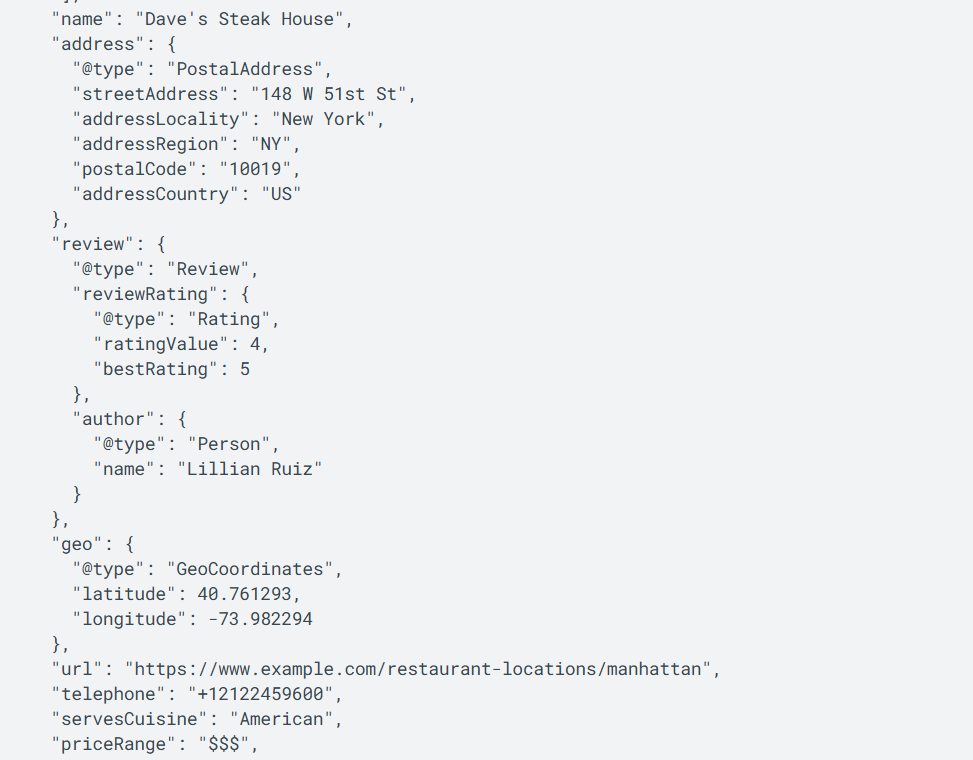
Implement schema markup in JSON-LD format in your website’s HTML. Google prefers JSON-LD and provides documentation and examples at schema.org. Use Google’s Structured Data Testing Tool to validate your implementation and identify errors.
Additional schema types enhance local relevance for specific business types. Restaurants should implement Menu schema, medical practices should use Physician schema, legal practices should apply Attorney schema, and any business with multiple locations should implement Organization schema with location information.
While citations represent one form of links for local businesses, developing a broader local link profile significantly boosts local authority and rankings. Local link building focuses on acquiring links from websites with local or geographic relevance to your business.
Not all backlinks carry equal weight in local search algorithms. A link from a local news site, chamber of commerce, or community organization holds more value for local rankings than a link from a national publication with no geographic connection to your market. Google recognizes these local connections and weighs geographically relevant links more heavily when determining local rankings.
Local links also drive referral traffic from audiences already in your geographic market, increasing the likelihood of conversions. Someone clicking from a local blog or news article to your website is more likely to become a customer than someone arriving from a national source.
Sponsor local events, sports teams, charities, or community organizations to earn links from their websites. Sponsorships often include logo placement and a link back to your website on sponsor pages. Choose sponsorships aligned with your values and target audience for maximum benefit beyond the link itself.
Partner with local media to contribute expert commentary or articles. Local newspapers, magazines, radio stations, and TV news often need expert sources for stories relevant to your industry. Establish relationships with local journalists and offer yourself as a resource. Media coverage typically includes links to your website while building brand awareness and credibility.
Engage with local bloggers and influencers in your area or industry. Many cities have active blogger communities covering local businesses, restaurants, events, and services. Building relationships with these creators can lead to features, reviews, or mentions that include valuable links to your website.
Join local business associations, chambers of commerce, and industry groups. Membership typically includes directory listings on their websites with links back to yours. These links carry authority because they come from established organizations and signal your involvement in the local business community.
Create linkable local content like comprehensive local guides, original local research or surveys, interactive local maps or tools, and local industry reports or whitepapers. Content specifically valuable to your local audience naturally attracts links from other local websites looking to reference helpful resources.
Host or participate in local events that generate coverage and links. Whether sponsoring community events, hosting workshops or seminars, participating in charity drives, or organizing industry meetups, events create opportunities for links from event calendars, news coverage, and participant websites.
Not all local businesses serve customers at a fixed location. Service-area businesses like plumbers, electricians, cleaning services, landscapers, and contractors operate differently than storefront businesses, requiring adjusted local SEO strategies.
Service-area businesses don’t meet customers at their business address, instead traveling to customer locations within defined service regions. This creates unique challenges for local SEO since traditional proximity ranking factors work differently when your business address isn’t where you provide services.
Google allows service-area businesses to hide their business address in Google Business Profile while specifying service areas. This approach prevents customers from visiting an office where you don’t serve them while still allowing you to appear in relevant local searches throughout your service region. You can specify up to 20 service areas by city or zip code in your GBP.
Create individual location pages for each major city or region you serve, even if you don’t have physical offices there. Each location page should include unique content describing your services in that area, testimonials from customers in that location, information about local regulations or considerations specific to that area, and your service area prominently displayed.
Target “near me” searches and service-focused keywords rather than only location-specific terms. Service-area businesses should optimize heavily for phrases like “emergency plumber near me,” “same-day appliance repair,” or “affordable lawn service” that indicate local intent without specifying a particular city.
Build citations in directories for each service area when possible. Many directories allow you to specify multiple service locations or regions, helping you build relevance across your entire territory rather than just your business address location.
Generate reviews from customers across your service area. When requesting reviews, ask customers to mention their specific location or neighborhood when describing your service. Reviews mentioning multiple areas throughout your service region strengthen your relevance for searches in those locations.
While ecommerce companies sell primarily online, many can significantly benefit from local SEO strategies, particularly those with physical showrooms, those offering local pickup or delivery, or those targeting specific geographic markets. Businesses operating online stores often partner with specialized ecommerce search engine optimization services to optimize both their digital storefronts and local presence for maximum visibility in target markets.
If you operate physical retail locations alongside your online store, optimizing for local search helps drive foot traffic to your showrooms. Create Google Business Profiles for each location, optimize for local keywords combining your products with your locations, and encourage in-store customers to leave reviews mentioning their shopping experience.
Ecommerce businesses offering local delivery or pickup services should emphasize these options in their local optimization. Many consumers prefer supporting local businesses when possible and value same-day delivery or avoiding shipping costs. Optimize GBP profiles to highlight local delivery or pickup options, create content about your local delivery areas and policies, and target keywords like “same-day delivery [city]” or “local [product] delivery.”
Online businesses targeting specific geographic markets rather than nationwide audiences benefit from geo-targeted local SEO. A company selling products unique to a region (local food products, regional apparel, location-specific gifts) should optimize for local searches from their target markets even without physical locations.
Managing local SEO across multiple platforms and locations becomes increasingly complex as businesses grow. Fortunately, numerous specialized tools help streamline citation management, review monitoring, rank tracking, and performance measurement.
Google Business Profile itself provides built-in insights showing how customers find your listing, actions they take, where photos are viewed, and comparison data against similar businesses. These free analytics offer valuable insights for optimization decisions.
Google Search Console and Google Analytics provide website-specific data including organic search performance for location-based keywords, geographic reports showing where traffic originates, and landing page performance for location pages. These free Google tools remain essential for any SEO strategy.
BrightLocal offers comprehensive local SEO management including citation building and monitoring, review monitoring and management, local rank tracking, reputation management, and reporting tools for agencies. BrightLocal excels at competitive analysis and showing how your local presence compares to competitors.
Moz Local simplifies citation management by distributing business information to major data aggregators and directories, monitoring citation accuracy across platforms, identifying duplicate listings requiring removal, and providing listing optimization recommendations. Moz Local works particularly well for businesses managing multiple locations.
Whitespark focuses specifically on local citation discovery and building, providing local citation finder tools, citation building services, reputation management, and local search rank tracking. Whitespark’s citation finder helps identify where competitors have citations that you’re missing.
SEMrush includes robust local SEO features including local keyword research tools, rank tracking for specific locations, competitor analysis for local markets, and listing management capabilities. SEMrush works well for agencies managing clients across different markets.
Establish key performance indicators (KPIs) that measure local SEO success. Important metrics include Local Pack rankings for target keywords, organic rankings for location-based terms, Google Business Profile views and actions, website traffic from local searches, direction requests and phone calls, review quantity and average rating, and ultimately conversions from local traffic.
Set up location-specific rank tracking to monitor performance in different geographic areas. Tools like Local Falcon provide geo-grid tracking showing your rankings at different points across your service area, revealing where you’re strongest and where improvement is needed.
Monitor Google Business Profile insights regularly to understand customer behavior. Track which search queries trigger your listing, what actions customers take most frequently, how customers discover your profile (direct search vs discovery), and peak times for views and actions.
Create regular reporting cadences monthly or quarterly to assess progress. Compare current performance against historical data to identify trends, analyze what’s working and what needs adjustment, and share results with stakeholders to demonstrate ROI.
Even experienced marketers make local SEO errors that undermine performance. Understanding common pitfalls helps you avoid them and maintain strong local visibility.
As discussed earlier, NAP inconsistencies represent one of the most common yet damaging local SEO mistakes. Even small variations in how your name, address, or phone number appear across platforms confuse search engines and dilute trust signals. A study found that 73% of consumers lose trust in brands when business listings contain incorrect information.
The fix requires auditing all citations to identify inconsistencies, creating a master NAP record as your single source of truth, systematically correcting inconsistencies starting with major platforms, and implementing processes to maintain consistency going forward. Many businesses correcting NAP issues see ranking improvements within weeks as Google recognizes consistent signals.
Multiple listings for the same business location creates confusion, splits reviews across profiles reducing social proof on each, dilutes optimization efforts, and risks violating Google’s guidelines potentially resulting in suspension. Duplicates often arise when different people claim listings without coordizing, businesses move locations without properly updating, or listings accumulate over years without proper management.
Search for all existing listings for your business, mark duplicates requesting removal through Google Business Profile, consolidate reviews when possible by contacting Google support, and maintain only one accurate listing per location going forward.
Failing to request, monitor, or respond to reviews represents missed opportunities on multiple levels. Reviews influence rankings, impact consumer purchasing decisions, and provide valuable feedback. Businesses that ignore reviews signal to both customers and search engines that they don’t actively manage their online presence or care about customer feedback.
Implement systematic review generation processes, respond to every review promptly and professionally, use reviews to identify business improvement opportunities, and showcase positive reviews on your website and marketing materials.
With the majority of local searches occurring on mobile devices, websites that don’t perform well on smartphones create terrible user experiences and lose potential customers. Mobile optimization issues include slow loading speeds, difficult navigation, hard-to-click buttons or phone numbers, forms that are difficult to complete on small screens, and content that doesn’t resize properly.
Ensure your website uses responsive design, test performance on actual mobile devices regularly, prioritize above-the-fold loading speed, and make contact information prominently clickable with one tap to call or get directions.
Overusing location keywords or business names in unnatural ways violates Google’s guidelines and creates poor user experiences. Examples include adding keywords to your business name in Google Business Profile, cramming keywords into content regardless of relevance, creating thin location pages that are obviously templates, and using hidden text or deceptive practices.
Write naturally for human readers first while incorporating keywords organically, create genuinely valuable content for each location page, follow Google’s guidelines for business names and descriptions, and focus on user experience and conversion rather than just rankings.