
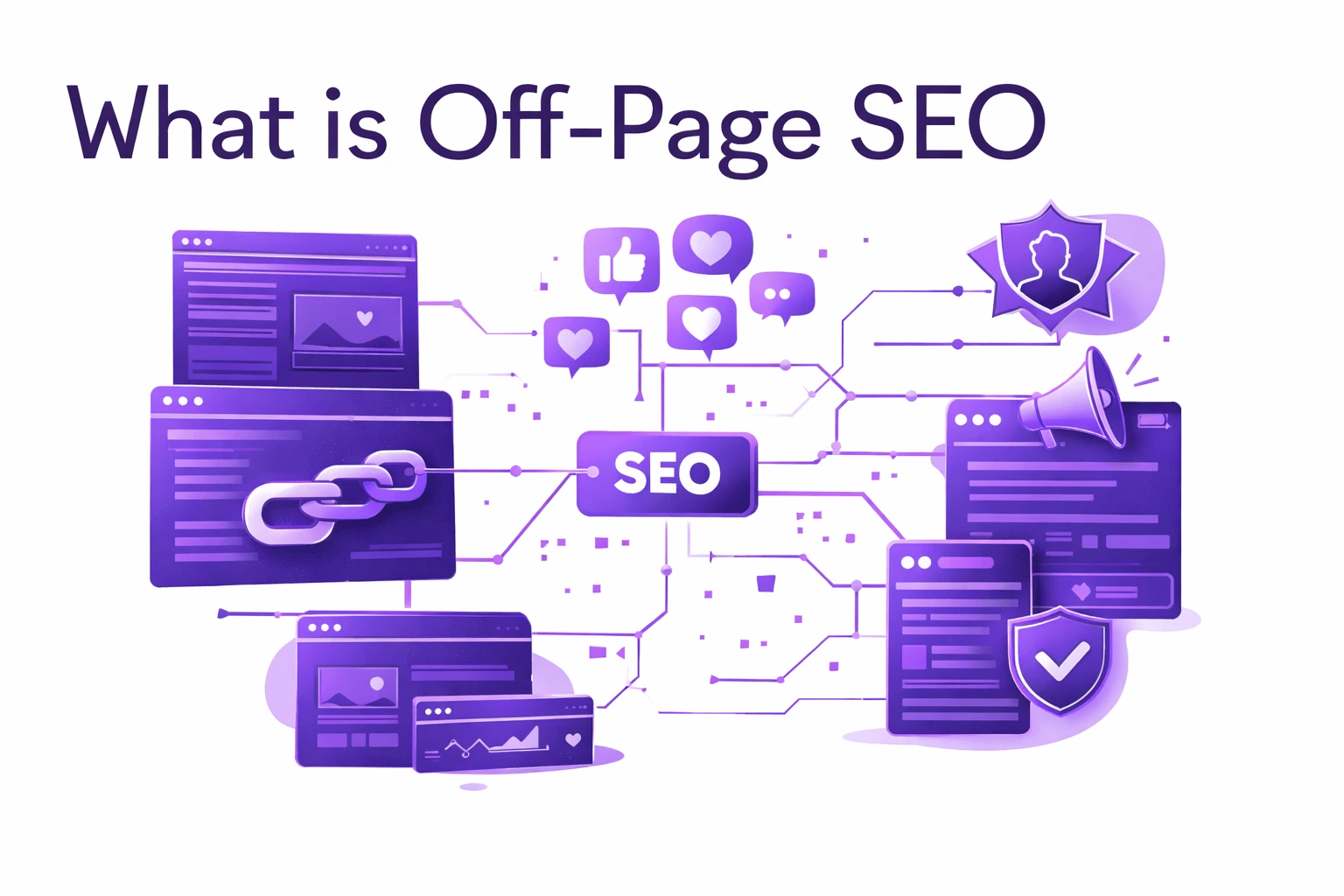
Off-page SEO is the practice of optimizing activities that occur outside your website to improve its search engine rankings and online authority. Unlike on-page SEO which focuses on optimizing content and HTML elements within your site, off-page SEO encompasses external signals including backlinks, brand mentions, social media engagement, online reviews, and digital PR that demonstrate your website’s credibility and trustworthiness to search engines.
The importance of off-page SEO has never been more critical in 2025’s competitive digital landscape. Research from Backlinko reveals that the number one result on Google has an average of 3.8 times more backlinks than positions 2-10, demonstrating the powerful impact of off-page signals on rankings. Moreover, off-page SEO accounts for approximately 50% of ranking factors according to industry studies, making it essential for any comprehensive SEO strategy. Without strong off-page optimization, even perfectly optimized on-page content struggles to achieve top rankings against competitors who have built robust external authority and credibility.
Understanding the distinctions between different SEO categories helps you build comprehensive optimization strategies that address all ranking factors.
Off-page SEO focuses exclusively on activities and optimizations occurring outside your website’s direct control. Primary components include earning high-quality backlinks from authoritative websites, building brand mentions and citations across the web, generating positive customer reviews and ratings, engaging in social media marketing and content distribution, participating in digital PR campaigns and media outreach, contributing to industry forums and online communities, and fostering influencer relationships and partnerships. These external signals collectively demonstrate to search engines that your website provides genuine value worth recommending to searchers.
On-page SEO encompasses everything you directly control within your website including keyword optimization and content quality, title tags and meta descriptions, header tag structure and internal linking, URL optimization and site architecture, and image optimization with alt text. You can implement on-page changes immediately without requiring cooperation from external parties, giving you complete control over these optimization elements.
Technical SEO addresses your website’s backend infrastructure ensuring search engines can effectively crawl, index, and understand your site. This includes site speed and Core Web Vitals optimization, mobile responsiveness and mobile-first indexing, XML sitemaps and robots.txt configuration, HTTPS security implementation, and structured data with schema markup. Technical SEO creates the foundation that allows both on-page content and off-page signals to be properly evaluated by search algorithms.
All three categories work synergistically to create comprehensive SEO strategies. Technical SEO ensures accessibility, on-page SEO delivers relevant content, and off-page SEO validates your authority and trustworthiness through external endorsement.
Backlinks also called inbound links or incoming links represent links from other websites pointing to your site. They function as votes of confidence, with each quality backlink telling search engines that another website considers your content valuable enough to reference. Google’s PageRank algorithm, which remains core to its ranking systems in 2025, fundamentally relies on analyzing how pages link to each other to determine authority and relevance.
Not all backlinks carry equal weight in search algorithms. Several factors determine backlink quality and impact on your rankings.
Domain authority and trustworthiness of the linking site significantly impact link value. A single backlink from The New York Times, Harvard University, or an industry-leading publication carries exponentially more weight than dozens of links from unknown, low-quality websites. Search engines evaluate the authority and reputation of linking domains when assessing how much credibility to transfer through links.
Relevance between the linking site and your content determines contextual value. A backlink from a website covering similar topics or serving similar audiences provides more ranking benefit than links from completely unrelated sites. If you operate a fitness website, links from health publications, gym equipment manufacturers, or nutrition blogs carry more weight than links from technology or finance sites.
Link placement within content affects value significantly. Editorial links appearing naturally within the main body content of articles carry substantially more weight than links in footers, sidebars, or author bios. Contextual placement signals genuine endorsement rather than reciprocal linking schemes.
Anchor text the clickable text of the hyperlink provides context about your content. Descriptive anchor text using relevant keywords helps search engines understand what your linked page covers, though over-optimization using exact-match keywords repeatedly can appear manipulative and trigger penalties.
Link building strategies have fundamentally shifted from quantity-focused tactics to quality-driven approaches emphasizing genuine value and relationships. The days of mass directory submissions, link exchanges, and paid link schemes are long gone, replaced by sophisticated algorithms that detect and penalize manipulative practices.
Google’s spam updates throughout 2024 and 2025 have made low-quality link building more dangerous than ever. The search engine now effectively identifies unnatural link patterns, link farms, private blog networks, and other schemes designed to artificially inflate backlink profiles. Websites caught engaging in these practices face severe penalties including dramatic ranking drops or complete removal from search results.
Modern link building prioritizes earning links through exceptional content and genuine value rather than aggressive outreach or manipulation. The most successful strategies in 2025 focus on creating linkable assets that naturally attract attention, building authentic relationships with industry publishers, and providing genuine value to linking partners rather than simply requesting favors.
Effective link building in 2025 requires strategic approaches that prioritize quality, relevance, and genuine value exchange.
Creating exceptional, link-worthy content remains the most sustainable link building strategy. When you publish content that provides unique value, other websites naturally reference and link to it as a credible resource.
Original research and data studies attract links because they provide unique insights unavailable elsewhere. Publishing industry surveys, conducting original studies, analyzing data sets, and sharing proprietary findings positions your content as a primary source that journalists, bloggers, and researchers cite when covering related topics. A comprehensive study on “E-commerce Conversion Rates by Industry in 2025” would naturally attract links from marketing blogs, industry publications, and business websites discussing conversion optimization.
Comprehensive guides and ultimate resources earn links by becoming go-to references in your industry. When you create the definitive guide on a topic thoroughly covering every aspect with actionable advice and examples other content creators reference your work when addressing related subjects. These pillar content pieces continue earning links months or years after publication as they maintain relevance and authority.
Visual content including infographics, charts, interactive tools, and data visualizations generate links because they’re highly shareable and easily embeddable. Publishers often seek compelling visuals to enhance their own articles, providing attribution links when they use your graphics. Tools, calculators, and interactive resources attract links as users share them and content creators reference them as valuable resources.
Digital PR combines traditional public relations with SEO objectives, focusing on earning media coverage and brand mentions that include valuable backlinks. This strategy has become increasingly effective as Google’s algorithms better recognize and reward authentic media endorsement.
Media outreach connecting with journalists and publishers positions you as an expert source in your industry. Services like Help a Reporter Out (HARO) connect journalists seeking expert quotes with knowledgeable sources. Responding to relevant queries with insightful commentary can earn you mentions and links in major publications. Building relationships with industry journalists ensures you become a go-to resource for future stories.
Newsworthy campaigns and original research provide compelling story angles that attract media attention. When you publish unique data, conduct interesting studies, or create innovative campaigns, journalists seek to cover them, naturally including links to your website as sources. A compelling statistic or surprising research finding can spark coverage across multiple publications, each providing valuable backlinks.
Press releases distributed through reputable channels generate brand visibility and potential links when properly executed. While generic press releases rarely earn significant traction, genuinely newsworthy announcements about company milestones, product launches, or industry initiatives can attract media pickup and links from news sites covering your industry.
Guest posting creating content for other websites in exchange for exposure and backlinks remains effective when executed strategically and ethically. The key lies in providing genuine value to host publications rather than simply securing links.
Target authoritative, relevant websites in your industry that reach your target audience. Focus on publications with established readership and strong domain authority rather than accepting any guest posting opportunity. One article on a respected industry blog provides more value than dozens on obscure, low-traffic sites.
Create exceptional content specifically for each publication rather than repurposing generic articles. Research their audience, understand their content style and topics, and pitch unique ideas that align with their editorial focus. Your contributed content should match or exceed the quality of their regular articles, providing genuine value to their readers.
Include natural, contextual links within your content where they add value for readers. Avoid forcing links or over-optimizing anchor text. One or two relevant, helpful links placed naturally within valuable content performs better than multiple promotional links that detract from content quality.
Broken link building identifies broken links on other websites and suggests your content as a replacement. This strategy works because webmasters appreciate being alerted to broken links that damage user experience, making them receptive to suggestions for working alternatives.
Find broken links on relevant, authoritative websites using tools like Ahrefs, SEMrush, or dedicated broken link checkers. Focus on high-quality sites in your industry where broken links point to content similar to what you offer. Resource pages, curated lists, and older comprehensive guides often contain broken links as referenced sites change or disappear.
Create or identify content on your site that serves as an appropriate replacement for the broken resource. Your content should address the same topic and provide similar or superior value to what the broken link originally offered. If no suitable content exists, create it specifically to serve as a compelling replacement.
Reach out to webmasters politely alerting them to broken links and suggesting your content as an alternative. Frame your outreach as being helpful first you’re improving their site by identifying issues with your link suggestion as a convenient solution rather than the primary purpose of your contact.
Analyzing competitor backlinks reveals opportunities to acquire similar links while identifying gaps in your own backlink profile. If competitors have earned links from specific publications or resources, you likely can too.
Use backlink analysis tools to examine where your competitors’ links come from. Identify patterns in linking domains are certain publications, directories, or resource pages frequently linking to multiple competitors? These sources represent clear opportunities for your own link acquisition.
Create superior content compared to what currently ranks and earns links. The “skyscraper technique” involves finding successful content in your niche, creating something better (more comprehensive, more current, more visual), then reaching out to sites linking to the original with your improved alternative. Publishers often welcome suggestions for better resources when genuinely superior options exist.
Replicate competitor link opportunities where appropriate. If competitors appear in industry roundups, resource lists, or comparison articles, determine how you can qualify for inclusion. If they’ve earned links through specific strategies like data studies or tool creation, implement similar tactics tailored to your strengths and audience.
Beyond traditional backlinks, brand mentions and citations references to your brand name, products, or services across the web increasingly influence search rankings and visibility. Google’s algorithms have evolved to recognize and evaluate brand mentions even when they don’t include clickable links.
Unlinked brand mentions signal brand awareness, popularity, and relevance within your industry. When websites, social media, forums, and online discussions frequently mention your brand, search engines interpret this as evidence of authority and trustworthiness. These mentions contribute to your overall online reputation and can influence rankings even without direct link equity transfer.
Google’s Quality Rater Guidelines explicitly instruct human evaluators to look beyond what websites claim about themselves and instead investigate what others say about them across the web. This emphasis on external reputation signals demonstrates the importance of brand mentions in Google’s evaluation framework.
Generate brand mentions through consistent content marketing and thought leadership that positions your brand as an industry authority. Publishing insightful content, sharing expert perspectives, and contributing to industry discussions ensures your brand enters conversations naturally.
Participate actively in online communities, forums, and social media where your audience congregates. Provide genuine value through helpful answers, expert advice, and meaningful engagement rather than self-promotion. As you build reputation and authority within these communities, members naturally reference and recommend your brand.
Implement brand monitoring to track mentions across the web using tools like Google Alerts, Mention, or Brand24. When you discover unlinked mentions, reach out to content creators requesting that they convert mentions to links. Many will comply since they’ve already endorsed your brand by mentioning it.
Create mention-worthy campaigns, research, or content that naturally generates discussion. Original studies, surprising data, innovative tools, or controversial perspectives spark conversations where your brand becomes central to the discussion.
Customer reviews and overall online reputation significantly impact both off-page SEO and business success. Search engines consider reviews as trust signals that influence local rankings, while potential customers rely heavily on reviews when making purchasing decisions.
For local businesses, reviews directly influence Google Business Profile rankings and visibility in local pack results. Google considers review quantity, quality, recency, and diversity when determining local rankings. Businesses with numerous positive reviews consistently outrank competitors with fewer reviews, even when other ranking factors are similar.
Reviews also appear as rich snippets in search results through schema markup, displaying star ratings alongside organic listings. These visual enhancements increase click-through rates by providing social proof directly in search results. Pages with star rating rich snippets often receive 15-35% higher click-through rates compared to standard listings.
Prioritize Google reviews for local businesses since they directly impact Google Business Profile visibility and local rankings. Every positive Google review strengthens your local SEO while providing social proof for potential customers discovering you through search.
Industry-specific review platforms relevant to your business also deserve attention. Restaurants should prioritize Yelp and TripAdvisor, service professionals benefit from Angie’s List or HomeAdvisor, B2B companies gain value from G2 or Capterra, and healthcare providers should focus on Healthgrades or Zocdoc.
Monitor and manage your online reputation across all platforms where reviews appear. Respond to both positive and negative reviews professionally and promptly. How you handle criticism demonstrates customer service quality and can actually improve reputation when handled well.
While social media signals aren’t direct ranking factors, social media significantly impacts off-page SEO through several indirect mechanisms that influence visibility, traffic, and authority.
Social media amplifies content distribution, ensuring your content reaches broader audiences beyond your existing website visitors. When content gains traction on social platforms through shares, likes, and engagement, it increases the likelihood that publishers, bloggers, and content creators discover and link to it.
Social profiles often rank in branded search results, increasing your overall SERP presence and controlling more real estate for brand-related queries. Optimized social profiles appearing alongside your website in search results provide additional touchpoints for engaging potential customers.
Social media drives referral traffic to your website, creating user engagement signals that may indirectly influence rankings. When social traffic demonstrates strong engagement metrics low bounce rates, high time on site, multiple pages visited it signals content quality and relevance to search engines.
Social platforms facilitate relationship building with influencers, journalists, and industry leaders who can provide valuable backlinks, mentions, and partnerships. Building genuine relationships through social engagement often leads to collaborative opportunities that benefit off-page SEO.
Focus on platforms where your target audience actively engages. LinkedIn excels for B2B companies targeting professional audiences, Instagram suits visual brands in fashion, food, design, and lifestyle, Twitter facilitates real-time engagement and industry discussions, Facebook reaches broad demographics particularly for local businesses, and YouTube provides video content opportunities with strong search engine visibility.
Consistency matters more than presence on every platform. Choose 2-3 platforms where your audience concentrates and maintain active, engaging presences rather than spreading thin across numerous platforms with inconsistent activity.
Even experienced marketers make off-page SEO errors that undermine performance or risk penalties. Understanding common pitfalls helps you avoid them while building sustainable authority.
Purchasing backlinks violates Google’s Webmaster Guidelines and risks severe penalties including dramatic ranking drops or complete removal from search results. Google’s algorithms have become exceptionally sophisticated at detecting paid link schemes through pattern recognition, unnatural anchor text distribution, and link velocity analysis.
Some businesses partner with an seo services for small businesses provider or pay per click advertising agency that promises quick results through purchased links, not understanding the serious risks involved. Always verify that any marketing partner employs white-hat strategies focused on earning rather than buying links.
Building links from irrelevant, low-authority websites provides minimal benefit while potentially harming your site’s reputation in search algorithms. Spammy directory submissions, blog comment spam, forum profile links, and other low-quality tactics waste resources while creating toxic backlink profiles that may trigger algorithmic or manual penalties.
Focus resources on earning fewer high-quality links rather than accumulating numerous low-quality links. One authoritative, relevant backlink provides more ranking benefit than hundreds of spam links while avoiding penalty risks.
Using exact-match keyword anchor text excessively appears manipulative to search algorithms. Natural link profiles include diverse anchor text including branded terms, generic phrases, naked URLs, and varied keyword combinations. Over-optimization using the same keyword phrases repeatedly signals artificial link building efforts and may trigger penalties.
Maintain natural anchor text diversity across your backlink profile. Most links should use branded or generic anchor text, with only occasional keyword-optimized anchors occurring naturally through editorial placement.
Excessive reciprocal linking “I’ll link to you if you link to me” appears manipulative and provides minimal SEO value. While occasional reciprocal links between genuinely relevant sites seem natural, systematic reciprocal linking schemes trigger algorithmic filters that discount or penalize such links.
Focus on earning one-way editorial links through genuine value rather than negotiating link exchanges. Quality publications link to valuable resources without requiring reciprocation, making these links more valuable for both SEO and referral traffic.
Effective off-page SEO requires ongoing measurement and analysis to understand what’s working, identify opportunities, and demonstrate ROI.
Monitor your backlink profile growth including total backlinks, referring domains, and domain authority or domain rating metrics. Focus particularly on high-quality links from authoritative, relevant websites rather than total link quantity alone.
Track branded search volume as increasing searches for your brand name signal growing awareness and authority. Tools like Google Trends, Google Search Console, or SEO platforms monitor branded search trends over time.
Measure referral traffic from backlinks using Google Analytics to identify which links drive actual visitors to your site. Quality backlinks should generate engaged traffic, not just exist for SEO value.
Monitor keyword rankings for target terms as off-page optimization improves. Ranking improvements for competitive keywords demonstrate that your authority-building efforts impact search visibility.
Assess domain authority or domain rating scores that estimate your overall website authority based on backlink profiles. While not official Google metrics, these third-party scores provide useful benchmarks for tracking authority growth over time.
Use comprehensive SEO platforms like Ahrefs, SEMrush, or Moz for backlink analysis, competitor research, and rank tracking. These tools provide detailed insights into your backlink profile, identify new and lost links, and analyze competitor strategies.
Implement Google Search Console to monitor search performance, branded searches, and links Google has discovered pointing to your site. This free tool provides direct insights from Google about how they perceive your site.
Employ brand monitoring tools like Mention, Brand24, or Google Alerts to track brand mentions across the web, identifying both linked and unlinked references to your brand.